

Nakatomi Corporation Insurance Discussion
Goals & Objectives
-
Present the timeline of events on December 24th, 1988
-
Accurately describe the insurance implications of the aftermath in that night’s festivities
-
Outline a sound insurance program for Nakatomi Corporation primarily for its US based operations, particularly highlighting commercial property
Who Is The Nakatomi Corporation?
Nakatomi Corporation was a multinational Japanese corporation which had a US branch headquarters located in Nakatomi Plaza in Century City, Los Angeles. Nakatomi was focused on international real estate development, construction, and finance, with diversified corporate holdings.
President of Nakatomi Trading and Vice Chairman of the Nakatomi Investment Group was Joe Takagi.
The following is a summary of events as it pertains to insurance implications, potential losses and the ideal insurance program Nakatomi Corporation should’ve had to help cover losses.
Summary of Events
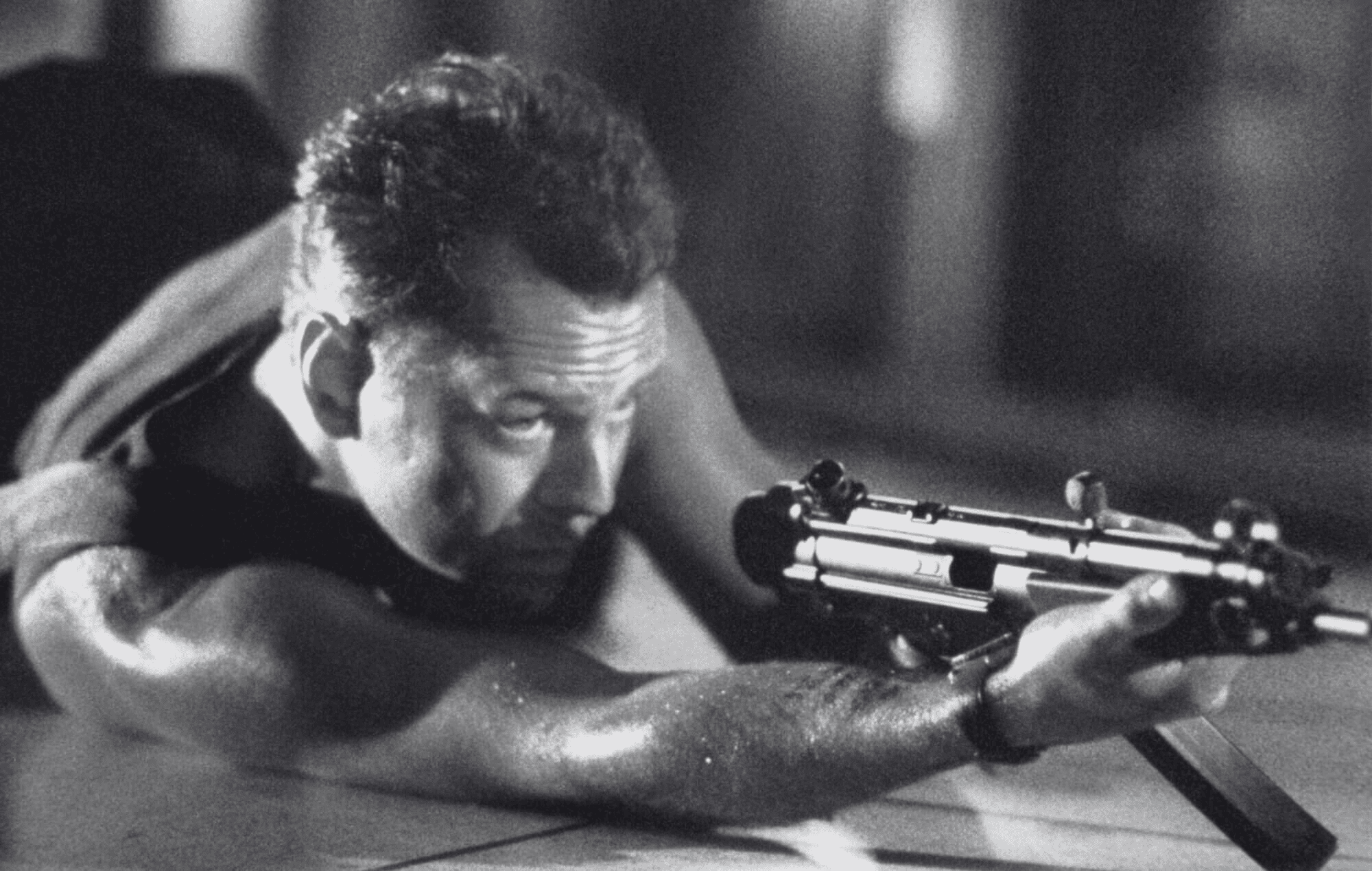
On December 24th, 1988, NYPD officer John McClane traveled to Los Angeles to reconcile with his wife Holly during her company’s Christmas party at Nakatomi Plaza in Los Angeles, California. A terrorist group led by Hans Gruber seized the skyscraper, took hostages, and attempted to steal $640 million in bearer bonds.
McClane evaded capture and fought the terrorists floor by floor, using improvised tactics that caused major structural damage—blown-out windows, destroyed offices, ruined electrical systems, and multiple explosions that rocked the tower. A rooftop helicopter assault ended in a fiery crash, further damaging the building.
Outside, the LAPD and FBI created chaos of their own: police cars were wrecked, streets were torn up by gunfire, and the surrounding neighborhood suffered from explosions and falling debris.
McClane ultimately killed Gruber, rescued Holly, and stopped the thieves’ escape, but the skyscraper and nearby area were left heavily damaged, with emergency responders flooding the scene as the battered hostages emerged.
Nakatomi Insurance Discussion
Nakatomi Corporation owned the high-rise, occupied part of it, and leased to other floors to tenants. The building contained employees, party guests, service vendors, and security and alarm services provided by Nakatomi Corp. Law enforcement involvement included the LAPD, LAFD, and the FBI, all of whom incurred their own losses. The perpetrators—Hans Gruber’s team—initiated the destruction by using a Pacific Carrier Corporation van. John McClane, an off-duty NYPD detective, ultimately stopped the attack, but his improvised tactics contributed to additional structural and collateral damage.
Key Parties And Roles
-
Building owner/landlord: Nakatomi Corporation (Japanese-based organization).
-
Tenants: Nakatomi and other occupants of the high-rise
-
Visitors: Party guests, vendors, elevator repair, etc.
-
Pacific Carrier Corporation
-
LAPD/LAFD/City of Los Angeles (public property and liability).
-
Federal Bureau of Investigation
-
Perpetrators: Hans Gruber’s terrorist crew
-
John McClane: NYPD detective off duty, visiting spouse’s company party
Nakatomi First-Party Losses (Property + Business Income)
Based on the time, the building should’ve been covered anywhere from $260 million to $320 million as part of a four-layer property tower with a total insured value of $320 million and an 80% coinsurance clause. At the time, “terrorism” generally was not an excluded peril so therefore will be treated as covered. $320 million was used due to the high cost of finishings Joe Takagi was partial for. The physical damage was extensive: explosions, fire, blown-out windows, compromised elevator systems, damaged mechanical, electrical, plumbing, and façade destruction—all resulting in a moderate-to-severe localized structural loss across multiple floors.
Based on 1988, estimated first-party property losses included:
-
Direct physical damage: $58.9M-$92.6M
-
Debris removal and cleanup: $2M-$5M
-
Pollution cleanup (smoke/soot): $340k–1.34M
-
Ordinance or Law B/C costs: $5M-$15.5M
-
Soft costs (A/E, permitting, finance, project management): $2.7M-6.74M
-
Extra expense (security, temporary power, shoring, swing-space buildout): $5M-$11.8M
This created an indicative property subtotal of $74.1M-132.7M.
During the restoration period—expected to exceed 12 months and likely fall between 18–24 months—Nakatomi faced significant Actual Loss Sustained Business Income exposure:
-
Business Income loss: $23.6M-$47.2M
This produced a total first-party Property + BI loss of $97.7M-$179.9M.
Coinsurance exposure also had to be considered. If the building’s true replacement cost exceeded estimates (e.g., actual RCV of $320M), the 80% coinsurance threshold would be $250M, meaning Nakatomi’s carried limit of $320M is fully compliant.
Nakatomi Liability & Litigation Exposure
Beyond its own property losses, Nakatomi would’ve faced liability claims stemming from injuries, fatalities, and allegations of negligent security. Many tenant property losses would default to tenants’ own policies due to lease waivers and builder’s risk provisions, but some claims could still pierce to Nakatomi.
Liability estimates:
-
Bodily injury (non-fatal), 20–40 claimants: $4.4M-$9.2M
-
Wrongful death (3–6 fatalities): $3.3M-11.1M
-
Tenant property claims not blocked by waivers: $740k-$2.2M
-
Defense costs (multi-defendant litigation over 3–5 years): $2.9M-6.6M
This created an indicative liability range of $11.34M-$29.1M.
Because the building had a standard GL policy supported by a $10M umbrella, stacked claims could rapidly exhaust the primary layer. Additional insured could offset some defense or indemnity costs.
City of Los Angeles & LAPD Losses
The City’s first-party losses included destroyed and damaged equipment during the police response:
-
Police cruisers: $148k-$222k
-
APC / armored vehicle: $111k-222k
-
Misc. communications/command equipment: $111k-296k
City property subtotal: $370k-$740k
The City also incurred workers’ compensation exposure:
-
Line-of-duty death benefits: $740k-$1.8M
-
Officer injury claims: $370k-$1.1M
City WC subtotal: $1.1M-2.9M
This produced a City-wide indicative total of $1.47M-3.64M in its own losses.
Due to public-entity immunities, significant third-party liability payouts by the City were unlikely; most nearby businesses affected by outages or street shutdowns would rely on their own Service Interruption or Civil Authority coverage rather than suing the City.
Pacific Carrier Corporation (Stolen Van Vendor)
PCC suffered both first- and third-party exposure when its van was stolen and used during the attack:
First-party losses:
-
Van actual cash value: about $11,500
-
Equipment inside the van: $5,000
-
Towing/storage/admin fees: $1,000
Third-party liability exposure was more significant. Depending on pleadings, PCC could face allegations such as negligent entrustment, failure to follow lot-security procedures, or operational negligence not directly tied to use of the vehicle. If the auto exclusion applied in some pleadings, roughly $1.1M of indemnity/defense could shift into General Liability.
FBI Helicopter Crash & Federal Government Losses
The rooftop helicopter assault—ending in a catastrophic crash—created separate third-party exposures attributable to federal operations.
-
Third-party claims tied to the helicopter event:
-
Bodily injury from blast/debris/smoke: $740k-$2.2M
-
Tenant property losses that escape waivers: $185k-$555k
-
Defense costs: $370k-$740k
Subtotal: $1.9M-$3.49M
A portion of Nakatomi’s property losses—estimated at $7.4M—could be argued as directly caused by the helicopter crash. While this does not increase Nakatomi’s insured payout, it creates a potential subrogation avenue. With an assumed 20% recovery ratio, subrogation could return about $1.4M to the property tower. As it relates to the loss of power to the building, Nakatomi Corporation realistically wouldn’t have a chance of subrogating any losses (business income) due entities of this nature having immunity. But, at a 20% recovery rate they could potentially receive.
The FBI’s own losses included:
-
Helicopter (airframe/equipment): $2.2M-$3.7M
-
Power Loss (Business Income): $4.7M-$9.4M after a lengthy litigation fight.
-
Mission/communications gear: $111k-$296k
-
FECA medical/indemnity for agent injuries: $370k-$1.1M
Government subtotal: $7.38M-$14.49M
John McClane Potential Losses
Civil liability for McClane is possible in theory but weak on the merits given self-defense, necessity, and superseding criminal acts. Most civil claims target Nakatomi (premises/security), not McClane. Their CGL/umbrella towers are deep pockets.
If sued, his personal HO/umbrella would likely defend; indemnity depends on pleadings and self-defense carve-outs. Most dollars and litigation focus would remain on the building owner and its contractors, not on McClane personally.
Overall Loss Frame & Insurance Program Stress
When aggregating all categories:
-
Nakatomi First-Party: $97.7M-$179.9M
-
Nakatomi Liability: $11.34M-$29.1M
-
City of LA/LAPD: $1.47M-3.64M
-
FBI Losses: $7.38M-$14.49M
-
Pacific Carrier Corporation: $1.1M Liability; $17,500 1st Party
This placed the broad incident loss range at $119M-$228M.
Several insurance program pressure points emerged:
-
The property tower would be tapped across multiple layers, with O&L and Debris Removal sublimits being critical.
-
The extended restoration timeline and ALS BI limit usage would test BI/EPI structures.
-
GL + umbrella layers faced meaningful casualty clustering risk.
-
Crime coverage would respond to the stolen bearer bonds separately from property/BI.
-
Kidnap & Ransom (K&R), typically triggered by crisis response and security needs, would play a small but important role, normally around the $5M limit.
Ideal Policy Summary
Policy Coverage
-
General Liability
-
Auto Liability
-
Excess Liability
-
Workers Compensation
-
Management Liability Package (D&O, EPL, Fiduciary, & Crime)
-
Kidnap & Ransom
-
Commercial Property (Lead Layer)
-
Commercial Property (Contd Layer) [across 9 layers]
General Liability
Coverages and Limits:
-
Each Occurrence: $1,000,000
-
Personal and Advertising Injury: $1,000,000
-
Products Completed Operations Aggregate: $2,000,000
-
General Aggregate: $2,000,000
-
Damage to Premises Rented to You: $300,000
-
Medical Expense: $10,000
-
BI/PD Combined Deductible Per Occurrence: $5,000
-
Employee Benefits Liability: $1,000,000 Each Employee / $1,000,000 Agg / $1,000 Ded / Based on 10 Employees
General Liability Rating Schedule
-
Class Code 61226: Buildings or Premises—Bank or Office—Other Than Not-For-Profit, $12,000,000 Sales
-
Class Code 61212: Office—Premises/Operations, $20,000,000,000 Sales
Business Auto
Coverages and Limits:
-
Liability Insurance: $1,000,000 (Symbol 1)
-
Uninsured Motorist: $250,000 (Symbol 2)
-
Underinsured Motorist: $250,000 (Symbol 2)
-
Auto Medical Payments: $5,000 (Symbol 2)
-
Physical Damage – Comprehensive Deductible: $1,000 (Symbol 7)
-
Physical Damage – Collision Deductible: $1,000 (Symbol 7)
-
Hired – Non-Owned Auto Liability: $1,000,000 (Symbols 8, 9)
Vehicle Schedule
-
1988 GMC G2500 Van: $1,000/$1,000 Deductible, $11,500 Cost New (2 units)
-
1988 Lincoln Town Car Limousine: $1,000/$1,000 Deductible, $29,000 Cost New (3 units)
Excess Liability
-
Each Occurrence: $10,000,000
-
Aggregate: $10,000,000
-
Retention: $10,000
Schedule of Underlying Policies
-
General Liability
-
Business Auto Liability
-
Employer’s Liability
Workers Compensation
-
Bodily Injury by Accident Each Accident: $1,000,000
-
Bodily Injury by Disease Each Employee: $1,000,000
-
Bodily Injury by Disease Policy Limit: $1,000,000
Workers Compensation Schedule
-
CA Class Code 8810: Clerical Office Employees NOC, $31,000,000 Est. Payroll
-
CA Class Code 8742: Salespersons, Collectors, or Messengers – Outside, $15,000,000 Est. Payroll
Commercial Package (Property & Inland Marine)
Commercial Property
-
Building: $320,000,000, RC, 80% Co-Ins, $1,000 Deductible
-
Business Personal Property: $285,000,000, RC, 80% Co-Ins, $1,000 Deductible
-
Location: 2121 Avenue of the Stars Los Angeles, CA 90067
-
Blanket, RC, $1,000 Deductible
-
Building Coverage Across 4 Layers
Additional Coverages:
-
Fine Arts: $10,000,000
-
Scheduled Property: $1,000,000
-
Misc. Property: $5,000,000
-
Owned Tools: $100 Any One Tool / $1,000 Any One Occurrence
-
Deductible: $1,000
Management Liability Package (D&O, EPL, & Crime)
-
Aggregate Policy Limit: $5,000,000
-
Retention: $10,000
-
Excess Side A: $1,000,000
Employment Practices Liability
-
Aggregate Policy Limit: $5,000,000
-
Retention: $10,000
-
Wage and Hour Defense Sublimit: $100,000
-
Immigration Defense Sublimit: $100,000
-
Optional Third-Party Liability Sublimit: $1,000,000 w/$10,000 Retention
-
Workplace Violence Expense Limit: $250,000 w/$0 Retention
-
Additional Defense: Covered
Crime
-
A. Fidelity (Employee Theft): $100,000, $1,000 Deductible
-
B. Forgery or Alteration: $25,000, $500 Deductible
-
C. On Premises: Covered, $500 Deductible
-
D. In Transit: Covered, $500 Deductible
-
G. Funds Transfer Fraud: $100,000, $1,000 Deductible
-
I. Claims Expense: $5,000, $0 Deductible
Addendum Builders Risk Discussion
There was active construction going on in the building at the time of the evening festivities. Let’s assume the best case scenario in the construction firm that was responsible for the work had both liability and physical damage coverage only to the areas under construction.
-
Primary coverage allocation: Damage solely to the under-construction areas / materials / temporary works sits with the builder’s risk policy (contractor or owner-controlled insurance program). Damage to completed/occupied areas remains in the Nakatomi Property program. This keeps much of the construction losses off the Nakatomi building subtotal — assuming clear separation of works.
-
Overlap / coordination issues:
-
Where the attack damaged elements that tie the WIP area to occupied portions (e.g., vertical shafts, fire/life safety, elevators), some repair costs will be shared or disputed between programs. With this, one could expect litigation or allocation negotiations.
-
Subrogation: if the contractor’s equipment or temporary works contributed to damage (or were stolen), the owner may seek subrogation. Conversely, if owner decisions caused delays, contractor may seek contribution. Earlier helicopter subrogation discussion shows this type of complexity and recovery uncertainty (assumed 20% recovery in some avenues).
-
Third-party claims: Contractor CGL typically picks up onsite BI to workers/visitors (subject to WC exclusivity for employees). However, third-party property damage caused by construction operations that impacted tenants or public property could create claims that straddle both the contractor GL and Nakatomi GL umbrella. Contracts and certificates of liability needed to be reviewed to see how this would’ve played out.
-
Effect on aggregated incident totals: Assuming a portion of the builders-risk damage already sat inside our Nakatomi first-party property figures (e.g., you already included some damage to under-construction floors in the $58.9M–$92.6M direct damage): the incremental add would be smaller or zero.
Robert Piretti
(205) 910-2907
